
Video as Code: Why Your Video Pipeline Should Be Diffable
August 22, 2026 · By VideoFlowLearn why treating video as structured code (VideoJSON) enables better version control, automated scaling, and cross-platform portability for engineering teams.
For years, video production has been a 'black box' for developers. Whether it's an After Effects project file or a massive binary MP4, the assets we use to communicate are often opaque, impossible to version control, and completely disconnected from our standard engineering workflows. If you want to change a hex code across a thousand videos, you don't run a script; you open an editor and start clicking.
It is time to treat video like we treat our infrastructure, our UI, and our databases. It is time for video as code.
The Problem with Binary Video Pipelines
Traditional video pipelines rely on proprietary formats. When you save a project in a GUI editor, you're creating a file that only that editor understands. This creates three major friction points for engineering teams:
- Zero Visibility: You can't
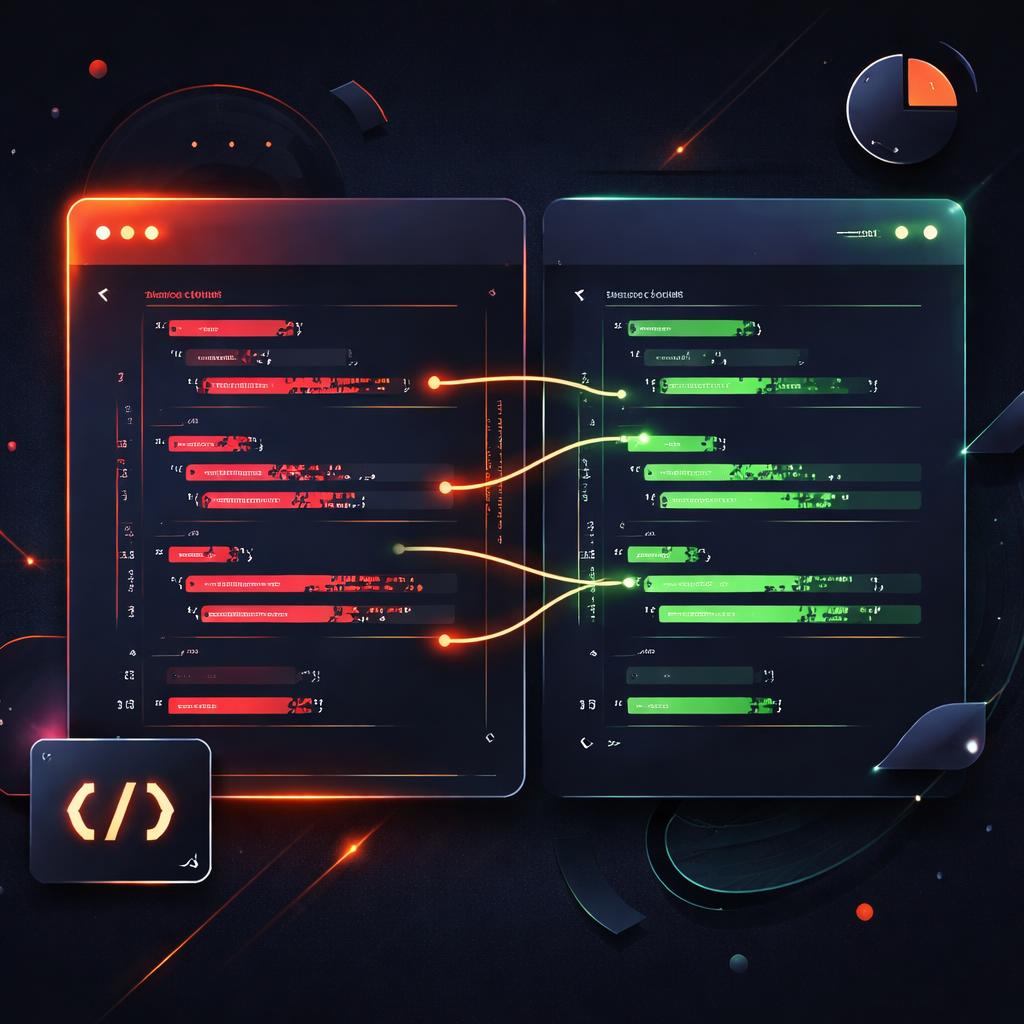
git diffa binary project file to see what changed between v1 and v2. - Vendor Lock-in: Your 'source of truth' is trapped in a specific tool's ecosystem.
- Manual Scaling: Automated updates (like rebranding) require manual intervention or fragile UI automation.
By moving to a Video as Code model, we resolve these issues by representing the entire video timeline as a structured, portable, and human-readable document.
Enter VideoJSON: The Portable Timeline
At the heart of VideoFlow is VideoJSON—a documented, serializable schema that describes every layer, animation, and effect in your video. Because it's just JSON, it fits perfectly into the tools you already use. You can store it in Postgres, version it in Git, and transform it with simple JavaScript.
When you use the @videoflow/core builder API, you aren't just 'making a video'; you are compiling a specification.
import VideoFlow from '@videoflow/core';

const $ = new VideoFlow({ width: 1080, height: 1080 });

// Add a background with a blur effect
const bg = $.addImage(
  { fit: 'cover', opacity: 0.8 },
  { source: 'https://assets.videoflow.dev/bg-mesh.jpg' }
);

bg.animate({ filterBlur: 0 }, { filterBlur: 0.5 }, { duration: '2s' });

// Add a centered title
const title = $.addText({
  text: 'VIDEO AS CODE',
  fontSize: 8, // em units for resolution-independence
  color: '#FF5A1F',
  fontWeight: 900,
  position: [0.5, 0.5]
});

title.fadeIn('500ms');

// Compile to portable VideoJSON
const videoData = await $.compile();
console.log(JSON.stringify(videoData, null, 2));
Why Diffable Pipelines Matter
When your video is a JSON document, your CI/CD pipeline can suddenly 'understand' your media. Imagine a pull request where a reviewer can see exactly that the fontSize of a caption was increased from 4 to 4.5, or that a transitionIn was changed from fade to blurResolve.
This level of transparency enables Confidence at Scale. If you are building an agentic video generation tool, your LLM can emit VideoJSON directly. You can then validate that JSON against a schema before a single frame is ever rendered.
One Source, Three Renderers
One of the most powerful aspects of the Video as Code approach is portability. Because the VideoJSON is agnostic to the rendering engine, you can use the same source code to power different parts of your application architecture:
- Live Preview: Use @videoflow/renderer-dom to show the user a frame-accurate 60fps preview in your web app.
- Client-Side Export: Let users download an MP4 directly from their browser using @videoflow/renderer-browser via WebCodecs.
- Server-Side Batching: Queue thousands of renders on your backend using @videoflow/renderer-server in Node.js.
How VideoFlow Handles the Architecture
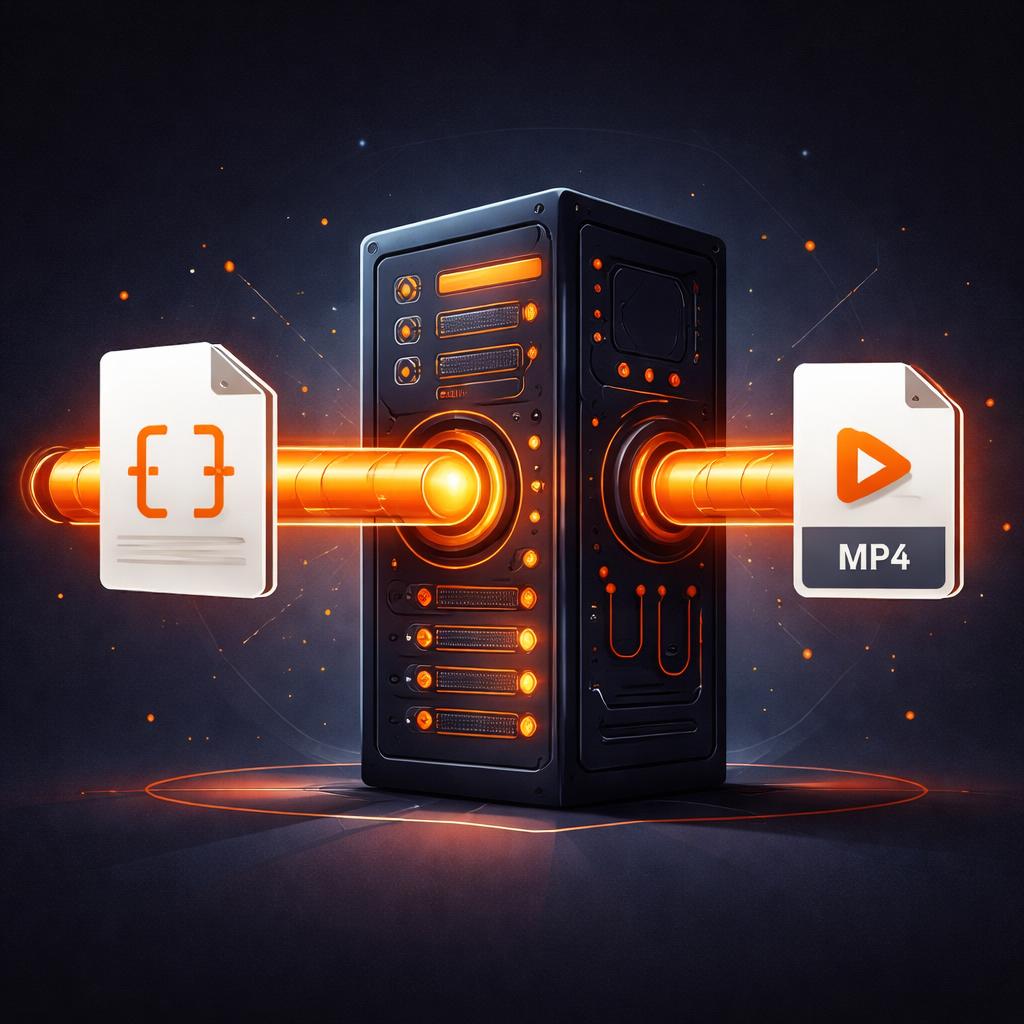
VideoFlow was built from the ground up to support this 'Video as Code' philosophy. By separating the Construction (the builder API) from the Representation (VideoJSON) and the Execution (the renderers), we've created a toolkit that scales from simple scripts to enterprise-grade content automation platforms.
Whether you are replacing fragile FFmpeg shell scripts or moving away from proprietary React-only solutions, VideoFlow gives you the freedom to treat video as a first-class citizen in your stack.
Ready to see your video in code? Head over to the VideoFlow Playground to build, edit, and export your first VideoJSON project entirely in the browser. For a deeper dive into the architecture, check out our Core Concepts guide or explore the source on GitHub.